recipes10 min prep + 20 min cook
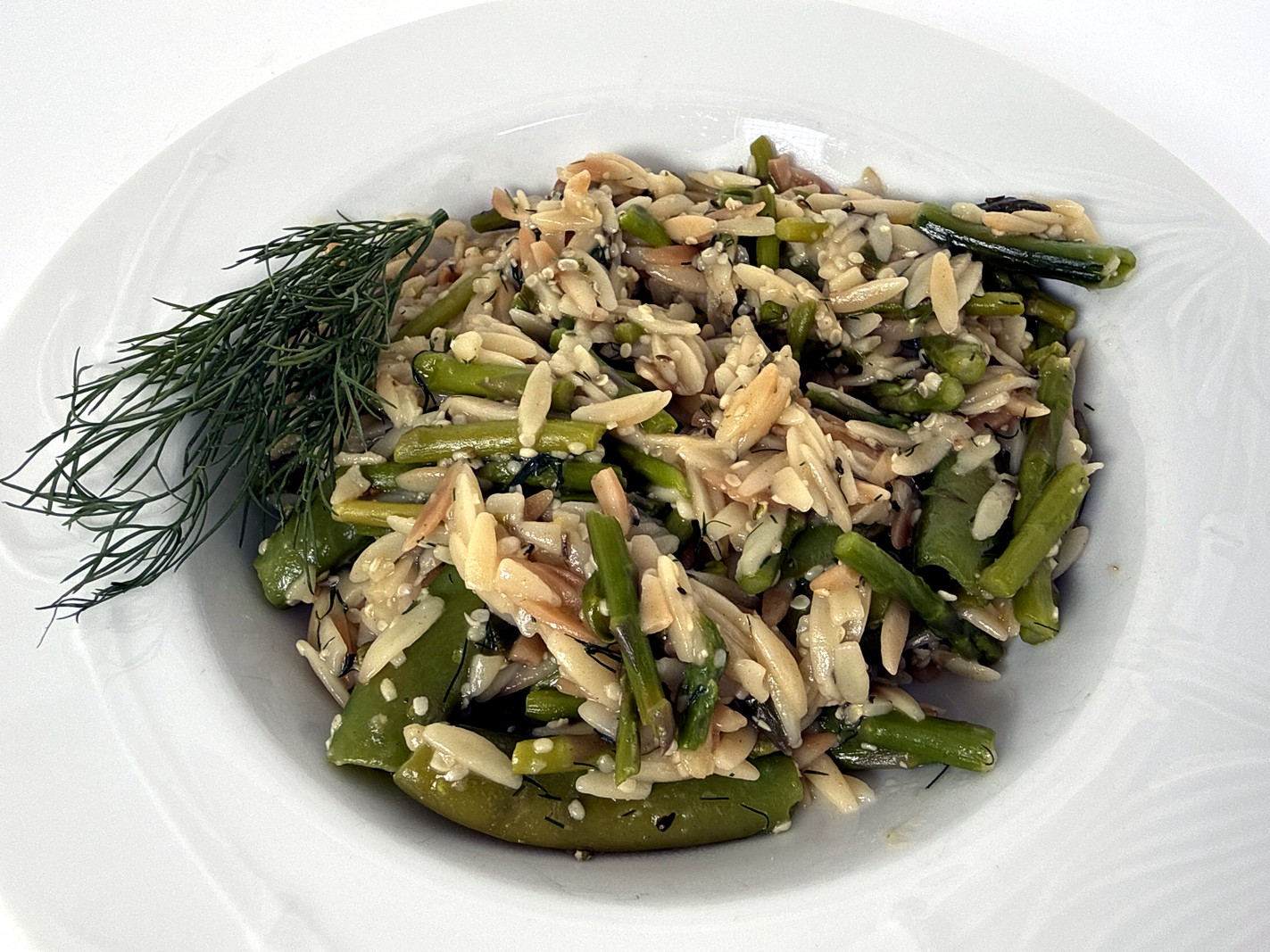
Orzo with Veggies
May 8, 2026
Rate this recipe
⏱️
Prep Time
10 min
🔥
Cook Time
20 min
🍽️
Servings
2
Nutrition per Serving
460
calories
21g
protein
73g
carbs
12g
fat
* Nutritional values are estimates
Instructions
- 1Prepare the asparagus, choy sum, bok choy or zucchini and cut into 1-2 inch pieces. Set aside.
- 2Melt butter in a 2-quart pan over medium heat.
- 3Add green onions and sauté for 2-3 minutes until softened.
- 4Add orzo and toast, stirring often, until the grains are golden and slightly browned, about 3-4 minutes.
- 5Add the broth, lemon juice (if using), and salt. Bring to a simmer.
- 6Cover and cook for 8 minutes, stirring once or twice to ensure the orzo isn't sticking.
- 7Add the veggies. Cook for about 6 more minutes until vegetables are al dente.
- 8Remove from heat and stir in the fresh dill and lemon zest.
- 9Taste and adjust seasoning if needed. Serve warm.
Recipe adapted from: Healthy, My Way by My Nguyen
Fresh Spring Flavors
This light and bright orzo dish celebrates spring vegetables with fresh dill and a touch of lemon. It's perfect as a side dish or a light main course.
Low-FODMAP Adaptations
Modified for sensitive stomachs:
- Green onions only: Uses just the green parts (white bulbs are high-FODMAP)
- Lemon flexibility: Zest provides flavor without acidity; juice is optional
- Asparagus portions: Keep to 15g (about 1/10 cup) per serving for FODMAP safety
- Sugar snap peas: Limited to 5 pods per serving (within FODMAP limits)
- Frozen peas: Better tolerated than fresh (up to 1 tbsp per serving)
Why This Works for GI Issues
- No garlic or onions: Uses green parts only for flavor without FODMAPs
- Gentle vegetables: Spring vegetables are generally easier to digest
- Fresh herbs: Dill adds flavor and may aid digestion
- Simple preparation: One-pot cooking means less oil and easier cleanup
- Broth-based: Cooked in broth rather than heavy cream or sauce
Toasting the Orzo
Don't skip this step! Toasting the orzo adds a nutty, complex flavor to the dish:
- Stir constantly to prevent burning
- Look for a golden color and slight browning
- You'll smell a toasted, nutty aroma when it's ready
- This step adds depth that makes the dish special
Vegetable Tips
- Asparagus: Choose medium-thickness spears; very thick ones take longer to cook
- Al dente is key: Vegetables should be tender but still have a slight bite
- Fresh vs. frozen peas: Frozen peas are actually sweeter and more convenient
- Don't overcook: Overcooked asparagus becomes mushy and loses its vibrant color
Serving Suggestions
- As a side: Pairs beautifully with grilled chicken, salmon, or white fish
- Light lunch: Serve on its own with a sprinkle of Parmesan cheese
- Add protein: Toss in cooked shrimp or shredded chicken for a complete meal
- Greek-inspired: Top with feta cheese (1.5 oz per serving is FODMAP-friendly)
Fresh Herb Options
While dill is traditional and delicious, you can experiment:
- Basil: Adds a sweet, Italian flair
- Parsley: Fresh and bright, milder than dill
- Chives: Mild onion flavor (green parts only)
- Mint: Unexpected but refreshing with peas
Make It Your Own
- Add cheese: Parmesan, feta, or fresh mozzarella work well
- Include tomatoes: Small portions of cherry tomatoes if tolerated (1/5 cup max)
- Extra veggies: Add zucchini or bell peppers (within FODMAP limits)
- Lemon butter: Mix extra butter with lemon zest for richness
#dinner#side-dish#vegetarian#low-fodmap#gut-friendly#spring#one-pot#stovetop#quick-meals#pasta#tomato-free#weeknight
Comments
No comments yet. Be the first!
Leave a comment
Recipe Reviews
Share your experience with this recipe!
Please sign in to write a review for this recipe.
Community Reviews
No reviews yet. Be the first to share your experience with this recipe!